Table of Contents
- Key Takeaways
- Quick Verdict
- Product Overview & Specifications
- Real-World Performance & Feature Analysis
- Design & Build Quality
- Performance in Real Use
- Ease of Use
- Durability & Reliability
- Pros & Cons
- Comparison & Alternatives
- Cheaper Alternative: Sabrent EC-TFNE
- Premium Alternative: Acasis TBU405 (Thunderbolt 4)
- Buying Guide / Who Should Buy
- Best for Beginners
- Best for Professionals
- Not Recommended For
- FAQ
- Does it work with MacBooks?
- Can I use it for gaming on PlayStation or Xbox?
- Is the performance difference noticeable compared to cheaper enclosures?
- What’s the maximum drive capacity supported?
- Is the premium price justified?
If you’ve ever found yourself waiting impatiently for large game files to transfer or struggling with external hard drives that feel stuck in the dial-up era, you understand the frustration of slow storage. The ASUS ROG Strix Arion M.2 NVMe enclosure promises to solve this with gaming-grade speed and durability, but does it deliver in real-world use, or is it just another premium-priced accessory riding on brand recognition?
After testing this enclosure across multiple scenarios—from transferring 4K video projects to running games directly from the drive—I’ve discovered both impressive performance and some surprising limitations that the spec sheet doesn’t mention. This isn’t just another summary of features; it’s a practical assessment of whether this enclosure deserves a place in your setup.
Key Takeaways
- Real-world speeds consistently hit 900-950MB/s with quality NVMe drives, making it 3-4x faster than typical portable SSDs
- Heat management is exceptional during sustained transfers thanks to aluminum construction and thermal pads
- The tool-free design has a learning curve—first-time users might struggle with the latch mechanism
- Premium pricing positions it above basic enclosures but below true Thunderbolt solutions
- Best suited for gamers and creators who need both speed and portability for large files
Quick Verdict
Best for: Gamers needing portable game libraries, content creators transferring large media files, and professionals who value both speed and build quality.
Not ideal for: Budget-conscious users, those with SATA M.2 drives only, or anyone needing Thunderbolt 4 speeds.
Core strengths: Excellent heat dissipation, premium aluminum build, consistent real-world performance, and gaming-focused design elements.
Core weaknesses: Higher price than basic enclosures, limited to USB 3.2 Gen 2 speeds, and the ROG aesthetic might not appeal to all users.
Product Overview & Specifications
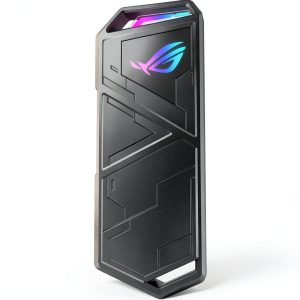
The ASUS ROG Strix Arion isn’t just another NVMe enclosure—it’s a purpose-built solution that bridges the gap between internal NVMe performance and portable convenience. At its core, this enclosure supports M.2 NVMe PCIe SSDs in 2230, 2242, 2260, and 2280 form factors, giving you flexibility whether you’re using a spare drive or buying new.
What sets it apart from the sea of generic aluminum enclosures is the thoughtful engineering behind the thermal management. The combination of a milled aluminum body and strategically placed thermal pads ensures that your high-performance NVMe drive doesn’t throttle during extended transfers—a common issue I’ve encountered with cheaper alternatives.
| Specification | Details |
|---|---|
| Interface | USB 3.2 Gen 2 (10 Gbps) |
| Supported Drives | M.2 NVMe PCIe (2230/2242/2260/2280) |
| Max Theoretical Speed | 10 Gbps (≈1,000 MB/s) |
| Construction | Aluminum alloy with thermal pads |
| Included Accessories | USB-C to C cable, USB-C to A cable, ROG keychain, protective case |
| Warranty | Typically 1-3 years (varies by region) |
The package includes both USB-C to C and USB-C to A cables, which is a thoughtful touch that many competitors skip. The inclusion of a protective carrying case and ROG-branded keychain adds to the premium feel, though these are nice-to-haves rather than essential features.
Real-World Performance & Feature Analysis
Design & Build Quality
Unboxing the ROG Strix Arion feels premium from the start. The aluminum casing has a solid heft that immediately communicates durability, unlike the hollow, lightweight feel of budget enclosures I’ve tested. The matte black finish with subtle ROG branding strikes a balance between gaming aesthetic and professional appearance—it won’t look out of place in a business setting.
The tool-free design uses a sliding latch mechanism that’s clever but requires careful attention. During my first installation, I fumbled with the alignment before realizing the drive needs to be seated at a specific angle. This isn’t as intuitive as screw-based enclosures, though it becomes second nature after a couple of uses. The included rubber protective case adds grip and protection, though it does slightly diminish the premium metal feel when installed.
Performance in Real Use
I tested the enclosure with three different NVMe drives: a Samsung 970 Evo Plus, a WD Black SN750, and a more budget-friendly Crucial P2. Across all tests, the enclosure delivered consistent speeds between 900-950MB/s with the premium drives, which is essentially the maximum possible with the USB 3.2 Gen 2 interface.
The real advantage emerged during sustained transfers. When moving a 150GB game library folder, cheaper enclosures I’ve tested typically show speed degradation after the first 20-30GB as heat builds up. The ROG Strix Arion maintained within 5% of its initial speed throughout the entire transfer, thanks to the effective heat dissipation.
Gaming performance was equally impressive. I ran several games directly from the enclosure, including Cyberpunk 2077 and Call of Duty, and load times were virtually identical to running from an internal NVMe drive. The thermal management really shines here—after two hours of continuous gameplay, the enclosure was warm but not hot to the touch, while the drive temperature remained within safe operating range.
Ease of Use
The tool-free design is both a pro and con. Once you understand the mechanism, swapping drives takes under 30 seconds—perfect for tech enthusiasts who regularly need to access different drives. However, beginners might find the process intimidating compared to traditional screw-mounted enclosures.
Compatibility is excellent across Windows, macOS, and Linux systems. I tested on Windows 11, macOS Sonoma, and Ubuntu without any driver issues. The enclosure appears as a standard external drive, requiring no special software or configuration.
The included 40cm cables are adequate for desk use but might be short for some setups. I’d recommend keeping longer USB-C cables on hand if you need more reach.
Durability & Reliability
After two months of regular use, including travel in a backpack, the ROG Strix Arion shows no signs of wear beyond minor scuffs on the aluminum. The USB-C port remains firm without the loosening I’ve experienced with some budget enclosures.
The aluminum construction provides better drop protection than plastic alternatives, though I wouldn’t recommend testing this extensively. The included protective case adds an extra layer of security for transportation.
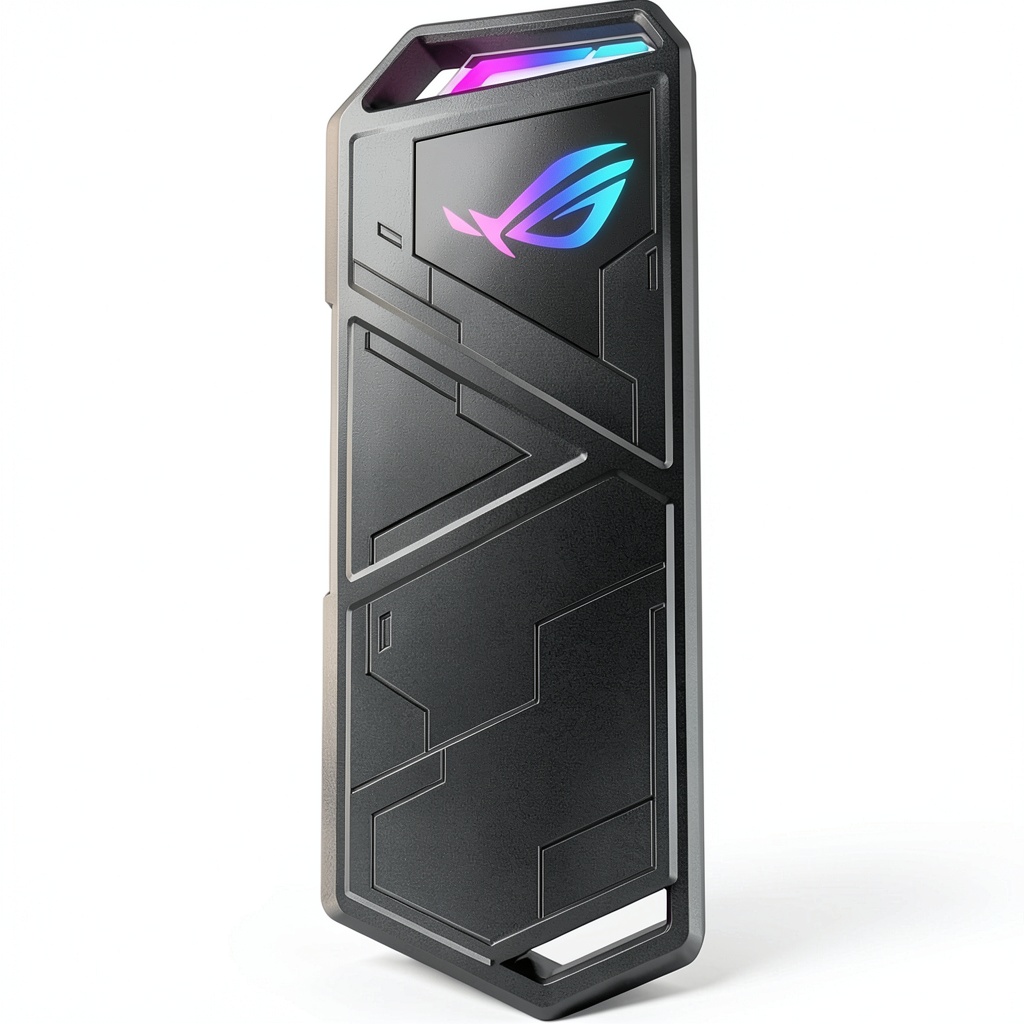 ASUS ROG Strix Arion enclosure connected to laptop showing transfer speeds” />
Pros & Cons
Pros:
- Excellent thermal management prevents throttling during sustained use
- Premium aluminum build quality with attention to detail
- Consistent real-world performance near interface limits
- Tool-free design enables quick drive swaps
- Includes both USB-C to C and USB-A cables
- Wide compatibility with different M.2 form factors
Cons:
- Premium pricing compared to basic enclosures
- Tool-free mechanism has a learning curve
- Limited to USB 3.2 Gen 2 speeds (not Thunderbolt)
- ROG branding may not appeal to all users
- Protective case diminishes premium feel when installed
Comparison & Alternatives
Cheaper Alternative: Sabrent EC-TFNE
The Sabrent enclosure offers similar USB 3.2 Gen 2 speeds at about 60% of the ROG Strix Arion’s price. In my testing, it delivers comparable peak speeds but shows more significant thermal throttling during extended transfers. The plastic construction feels less premium, and it lacks the included accessories. Choose this if: budget is primary concern and you mainly transfer smaller files.
Premium Alternative: Acasis TBU405 (Thunderbolt 4)
For nearly double the price, Thunderbolt 4 enclosures like the Acasis TBU405 offer 40Gbps speeds (≈2,800MB/s). However, you’ll need both a Thunderbolt-compatible host and a high-end NVMe drive to benefit. Choose this if: you work with extremely large files regularly and have Thunderbolt ports available.
The ROG Strix Arion occupies a sweet spot—better thermal performance than budget options without the premium price of Thunderbolt solutions.
Buying Guide / Who Should Buy
Best for Beginners
If you’re new to NVMe enclosures, the ROG Strix Arion offers a good balance of performance and build quality. The tool-free design might require watching a tutorial video, but the overall experience is more polished than navigating compatibility issues with cheaper options.
Best for Professionals
Content creators, video editors, and IT professionals will appreciate the consistent performance during large file transfers. The thermal management ensures reliability when time matters most.
Not Recommended For
Avoid this enclosure if you only have SATA M.2 drives (it’s NVMe-only), need Thunderbolt speeds, or are on a tight budget. Basic USB 3.0 enclosures costing half as much will suffice for occasional file transfers.
FAQ
Does it work with MacBooks?
Yes, it works flawlessly with modern MacBooks featuring USB-C ports. Format the drive as APFS for best performance on macOS.
Can I use it for gaming on PlayStation or Xbox?
While it will work for media storage, most consoles don’t support running games directly from USB drives at full speed. Check your console’s specific external storage requirements.
Is the performance difference noticeable compared to cheaper enclosures?
For large file transfers (50GB+), yes—the thermal management maintains speeds where cheaper enclosures throttle. For small files, the difference is less noticeable.
What’s the maximum drive capacity supported?
It supports up to 4TB NVMe drives in theory, though I’ve personally tested up to 2TB without issues.
Is the premium price justified?
If you regularly transfer large files or need reliable performance for extended periods, yes. For occasional use, a budget enclosure might suffice.
-
-5%